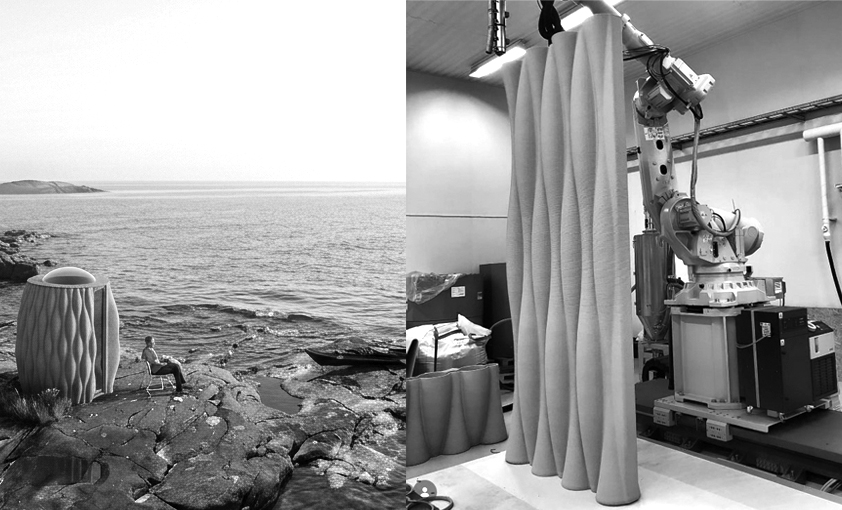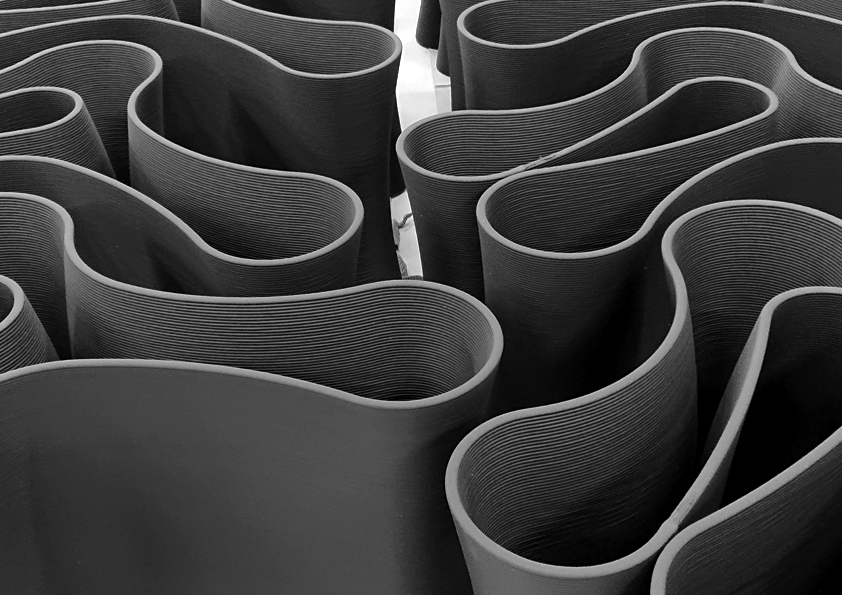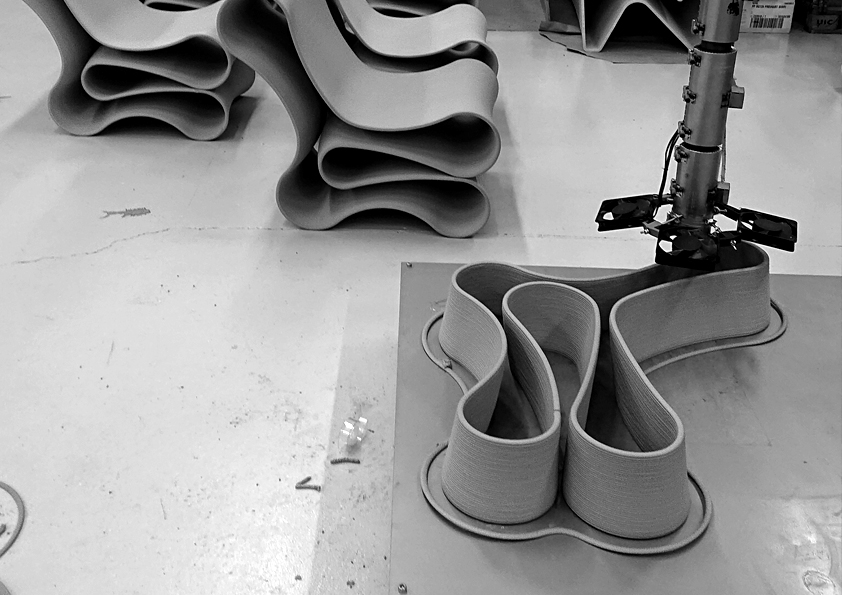
When people first see robotic 3D printed furniture, they often focus on the visual expression.
But the real innovation happens much deeper — inside the relationship between design and manufacturing.
At Reform Design Lab, we do not design objects first and “adapt them” to production later.
This requires a completely different mindset compared to traditional furniture production.
In conventional manufacturing, designers often work independently from production constraints during early stages. But robotic additive manufacturing changes the rules entirely.
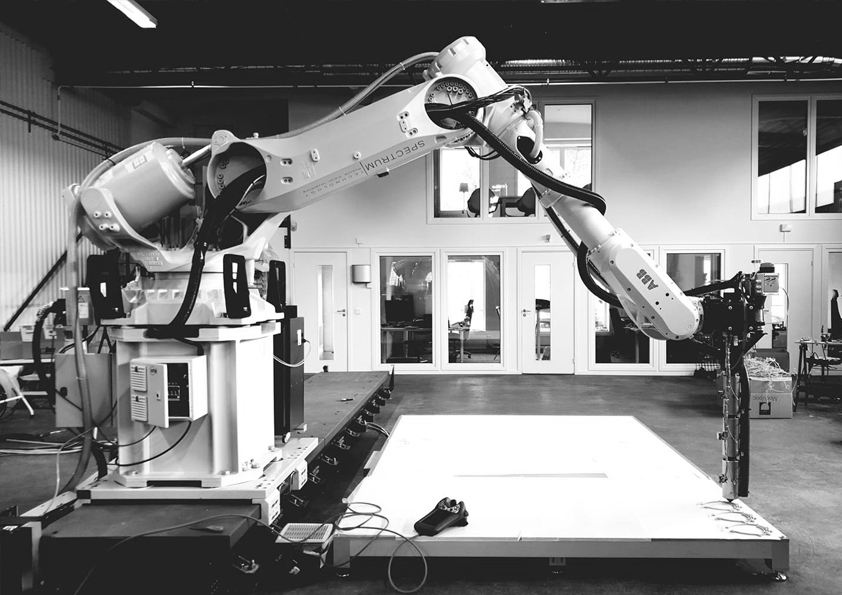
Every movement of the robot matters. The speed of the nozzle, the cooling time of the material, the direction of the print path, and the geometry itself all influence the final result. This means form is no longer purely aesthetic. Form becomes structural, thermal, and mechanical.
The flowing layered surfaces in our furniture are not visual effects. They exist because smoother robotic movement creates better surface quality and more stable material behavior during printing.
The design language is directly connected to physics and manufacturing logic.
This creates a new type of design process where engineering, production, and aesthetics merge into one discipline.
For us, this is one of the most exciting aspects of robotic manufacturing.